Sözlük
/iskelet
iskelet
"iskelet" kelimesinin İngilizcesi: skeleton, anatomy, frame, skeleton, skeleton. Anlamı, çevirisi, telaffuzu ve örnek cümleler aşağıdadır.
Çeviri
Genelskeletonnoun
Genelanatomy
Genelframe
Genelskeleton
Genelskeleton
Genelskeleton
Görsel
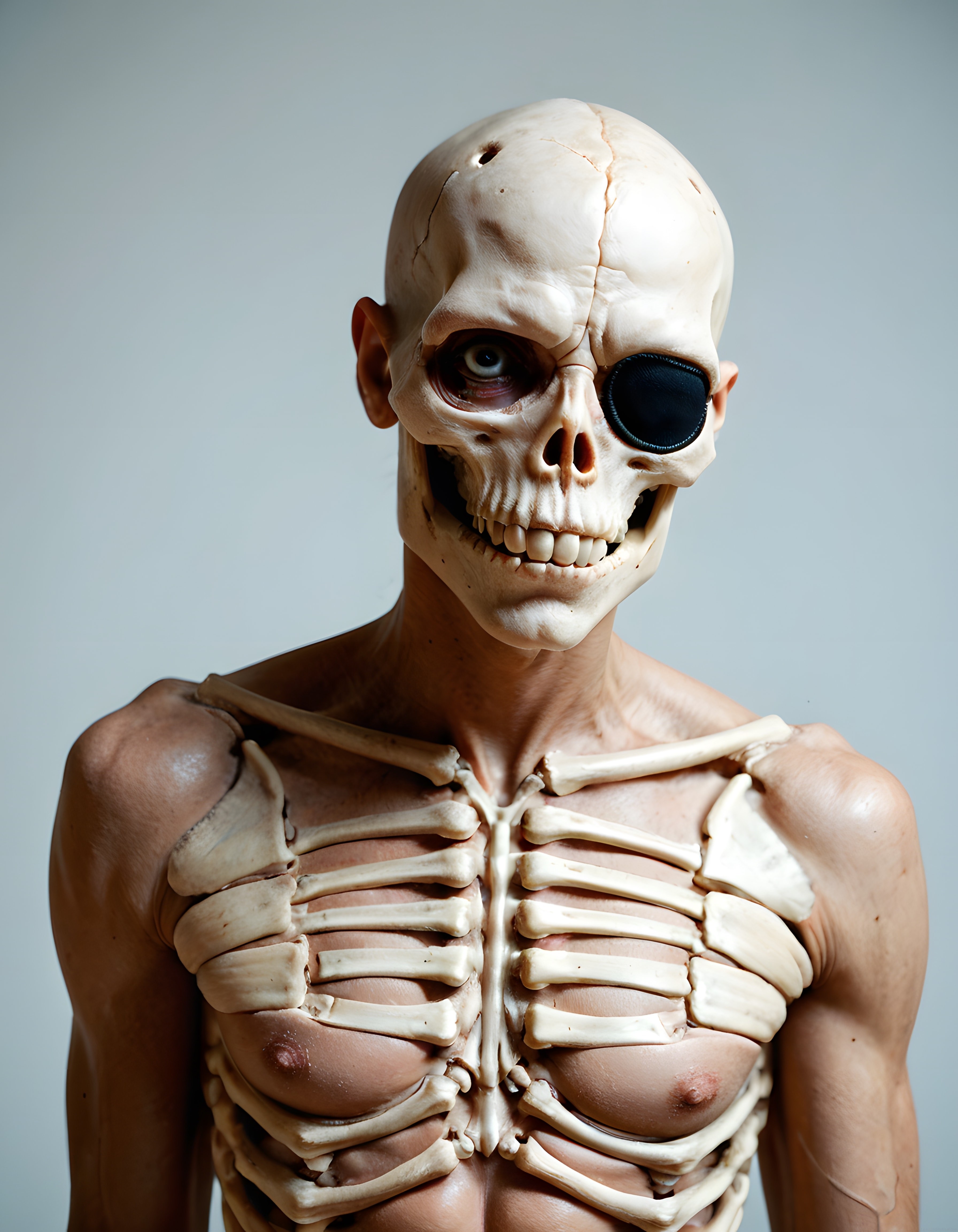
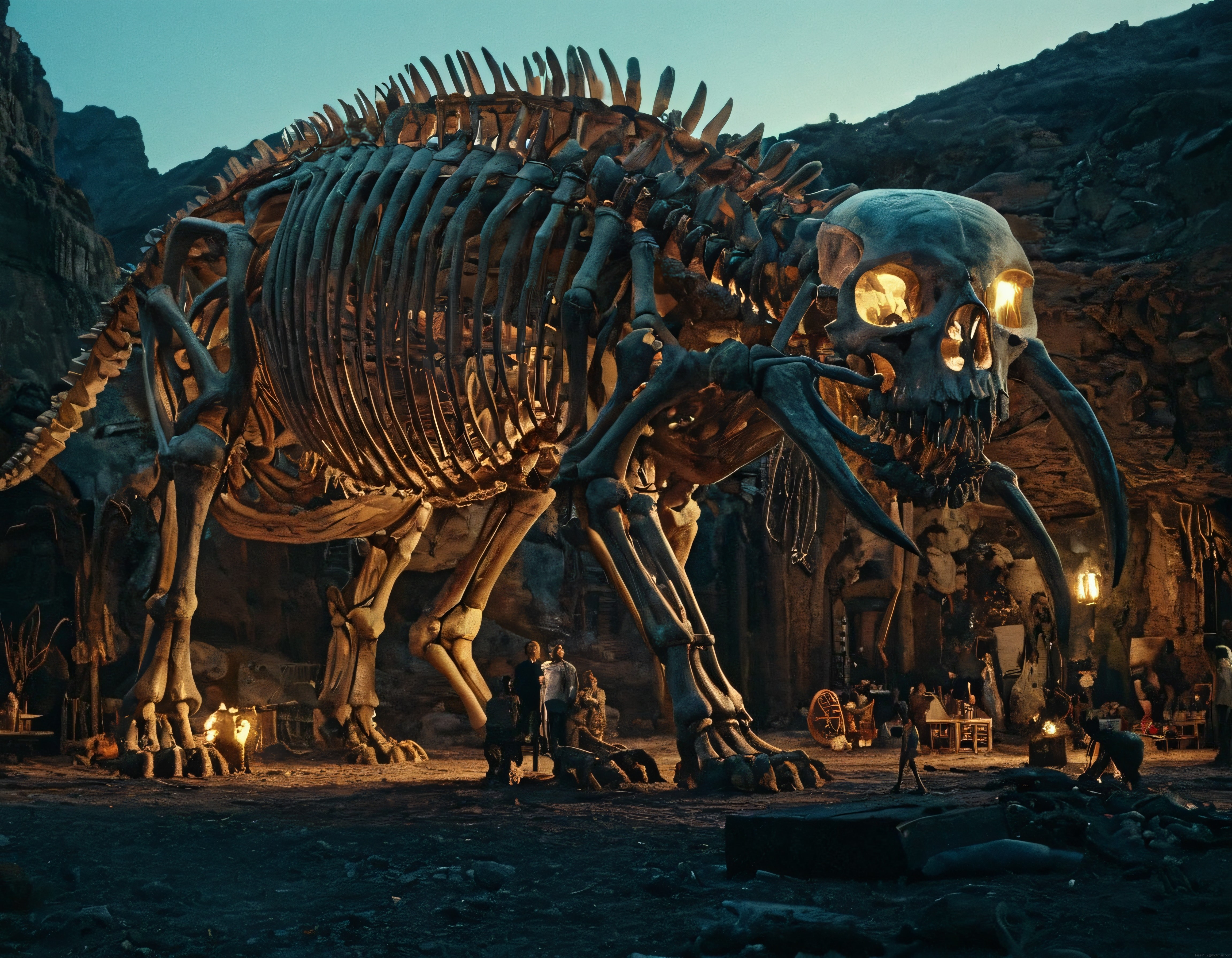


Çekim Tablosu
Belirtme (-i)iskeleti
Yönelme (-e)iskelete
Bulunma (-de)iskelette
Çıkma (-den)iskeletten
Tamlayan (-in)iskeletin
Çoğul (-ler)iskeletler
Tanım
•isim: İnsan ve hayvan bedeninin kemik çatısı; kadit, teşrih
•Yumuşak bölümleri dökülmüş, ölü bir vücudun kemiklerinin bütünü
•mecaz: Bir şeyi oluşturan temel çatı
•mecaz: Bir eserin genel planı
•sıfat, mecaz: Çok zayıf
•sıfat, mecaz: Kuru, çıplak
Diğer Dillerde
Almancaausarbeiten, Bild, einfassen, einrahmen, entwerfen, festlegen /ˈaʊ̯sˌʔaʁbaɪ̯tn̩/
to flesh out, to elaborate (on), to work out (details)
çekim: geçmiş arbeitete aus · ortaç ausgearbeitet · şimdiki arbeitet aus · ulaç ausarbeitend
köken: From Middle High German ūzarbeiten. Equivalent to aus- + arbeiten.
aile: Ausarbeiter, Ausarbeitung
Und die Antwort sind Skelette. — Cevabım iskeletler.
Gute Idee! Würden Sie die noch ein wenig ausarbeiten und mir dann nochmal vorlegen?
FransızcaSquelette (eril) /skə.lɛt/
skeleton · a very thin person
çekim: çoğul squelettes
eş: charpente, structure, charpente, structure
köken: From Middle French scelette, a learned borrowing from Latin sceletus, from Ancient Greek σκελετός (skeletós, “dried up, withered, dried body, parched, mummy”).
aile: squelettique
La réponse est : les squelettes. — Cevabım iskeletler.
İspanyolcaachacar, armar, armazón, bastidor, concebir, contextualizar /at͡ʃaˈkaɾ/
to attribute (something to someone); to blame
çekim: geçmiş achaqué · ortaç achacado · şimdiki achaca
eş: atribuir, imputar
köken: Borrowed from Arabic شَكَا (šakā, “to complain”) or more likely a derivative. The -ch- points to Maghrebi Arabic tšakka, from classical تَشَكَّى (tašakkā), which is a frequentative/intensive of the first-mentioned verb. Alternatively it might perhaps be from the noun الشَكْوَى (aš-šakwā, “complaint”); compare achaque.
aile: achacable, achaque
Y la respuesta es esqueletos. — Cevabım iskeletler.
[…] A esa característica de su literatura achaca Mañas el gancho que tienen sus novelas para ser adaptadas al cine.
İtalyancaarmatura, cornice, fotogramma, impalcatura, incastellatura, incastrare (dişil) /ar.maˈtu.ra/
armour/armor · framework · sheath (of a cable)
çekim: çoğul armature
eş: copertura, rivestimento, protezione, corazza, sostegno, impalcatura
köken: From Latin armātūra.
La risposta è... gli scheletri! — Cevabım iskeletler.
Rusçaкостяк, остов, каркас, скелет (eril) /skʲɪˈlʲet/
skeleton
çekim: çoğul скеле́ты · tamlayan скеле́та
eş: кости, остов, основа, каркас
aile: бесскеле́тный, скеле́т в шкафу́
А ответ такой — скелеты. — Cevabım iskeletler.
Meronym: че́реп (čérep)
Ну, скелет, погоди!
والجواب هو الهياكل. — Cevabım iskeletler.
frame · a rigid, generally rectangular mounting for paper, canvas or other flexible material · window frame
çekim: çoğul çərçivələr · tamlayan çərçivənin
köken: Borrowed from Classical Persian چهارچوب.
aile: çərçivəsində
skeleton
köken: Possibly somehow related to Hindi कंकाल (kaṅkāl) or Sanskrit कङ्काल (kaṅkāla).
жасуша қаңқасы
Felemenkçeframen, geraamte, inkaderen, raamwerk, ruwbouw, skelet /ˈfreː.mə(n)/
to frame (construct in words so as to establish a context for understanding or interpretation) · to frame (conspire to falsely incriminate an innocent person)
çekim: geçmiş frameden · ortaç geframed · şimdiki framet · ulaç framend
köken: Borrowed from English frame.
Het antwoord daarop is skeletten. — Cevabım iskeletler.
Portekizcearmação, emoldurar, enquadrar, estrutura, incriminar, moldura (dişil) /aʁ.maˈsɐ̃w̃/
arming · frame, framework, armature · skeleton (building structure)
çekim: çoğul armações
köken: From armar + -ção.
E a resposta é : esqueletos. — Cevabım iskeletler.
Yunancaκαδράρω, κάδρο, κορνίζα, κορνιζάρω, πλαίσιο, πλαισιώνω /kaˈðɾa.ɾo/
to frame (of a picture)
çekim: geçmiş καδράρισα · ortaç έχοντας καδράρει · şimdiki καδράρει · ulaç καδράροντας
köken: κάδρο (“frame”) + -άρω (“ending for verbs”).
Η απάντηση είναι οι σκελετοί. — Cevabım iskeletler.
skeleton (type of tobogganing) · frame of a house or a ship
köken: From English skeleton.
骨とペニスが密接に — Cevabım iskeletler.
skeleton · frame; framework
eş: 뼈대
köken: Sino-Korean word from 骨格/骨骼.
제 대답은 "골격"입니다. — Cevabım iskeletler.
a human skeleton · someone emaciated, a bag of bones
çekim: çoğul benrangels · tamlayan benrangels
köken: ben (“bone”) + rangla (“move unsteadily, stagger”)
Den ger oss ramverket. — Ana iskeleti oluşturuyor.
Lehçechudzielec, kadr, klatka, komponować, kościec, kościej (eril) /xuˈd͡ʑɛ.lɛt͡s/
toothpick, skeleton (very skinny or emaciated person)
çekim: çoğul chudzielcy · tamlayan chudzielca
eş: chudeusz, chudzina, chuderlak, chudoba, reg. pozn. ogigiel, skóra i kości
köken: Etymology tree Polish chudy Polish -elec Polish chudzielec From chudy + -elec.
Odpowiedź to: szkielety. — Cevabım iskeletler.
Ukraynacaкістя́к, склад, стату́ра /skɫad/
warehouse · composition (combination of individual parts that form something whole)
çekim: çoğul скла́ди · tamlayan скла́ду
aile: багатоскладо́вий, двоскладо́вий, односкладо́вий, трискладо́вий
Далі ми встановлюємо несучі конструкції. — Sonra iskeleti yaptık.
bones (the individual parts of a skeleton) · constituent parts, pieces
çekim: çoğul अंजर-पंजरों
köken: Reduplication of पंजर (pañjar).
batch (quantity of anything produced at one operation) · lot (separate portion; a number of things taken collectively) · installment/instalment (one of the portions of a debt or sum of money that is paid at regular intervals)
çekim: çoğul erät · tamlayan erän
köken: From Proto-Finnic *erä (compare Estonian ära (“away”)), from Proto-Finno-Ugric *erä (“apart”).
aile: erakko, erata, erehtyä, eri, ero, Eränen, eräs, eräytyä, erääntyä, alkuerä
Tuossa on dodon luuranko -kansio. — Şu da dodo iskeleti dosyası.
tällä erää
käydä erällä
skeleton (an anthropomorphic representation of a skeleton)
çekim: çoğul kostlivci · tamlayan kostlivce
eş: kostra, kostra, vyžle, hubeňour
köken: From kostlivý + -ec.
Jako další krok přijde na řadu stavba rámů. — Sonra iskeleti yaptık.
Převlékl se za kostlivce.
Ve filmu byli tančící kostlivci.
frame
çekim: çoğul cadre · tamlayan cadrului
köken: Borrowed from French cadre.
aile: încadra
Răspunsul e: scheletele. — Cevabım iskeletler.
build, physique, constitution (a person's physique) · temper, character, type (a person's temperament)
çekim: çoğul alkatok
köken: From obsolete alk (“to match, fit; to reach an agreement, make a deal”) + -at (noun-forming suffix). Created during the Hungarian language reform, which took place in the 18th–19th centuries.
aile: alkati, alkatú, alkatrész, testalkat
Ezután felállítjuk a favázat. — Sonra iskeleti yaptık.
intellektuális alkat
Latinceossium compāgēs, sceletus /ˈskɛ.ɫɛ.tʊs/
skeleton
çekim: çoğul sceletī · tamlayan sceletī
köken: Etymology tree Ancient Greek σκελετός (skeletós)bor. Latin sceletus Borrowed from Ancient Greek σκελετός (skeletós).
Det ble funnet elleve graver. — Oda mezarda 11 iskelet bulunmuştur.
frame (anything composed of parts fitted and united together; a fabric; a structure) · ellipsis of kerangka kerja (“framework”) · ellipsis of kerangka utama (“mainframe”)
çekim: çoğul kerangka-kerangka
köken: Affixed ke- + rangka (“skeleton”), from Malay kerangka.
aile: berkerangka, dikerangkakan, mengerangkakan, pengerangka, pengerangkaan, terkerangka, kerangka acuan, kerangka acuan bumi, kerangka acuan global, kerangka acuan inersial
Dan jawabannya adalah rangka. — Cevabım iskeletler.
a skeleton
köken: bộ + xương.
Câu trả lời là bộ xương. — Cevabım iskeletler.
Lão hành khất đúng là một bộ xương biết đi.
frame (piece of photographic film containing an image) · still (single frame from a film) · image, picture
çekim: çoğul ка́дри
köken: Borrowed from Russian кадр (kadr) or directly from French cadre; from Italian quadro (“framed painting, square”), from Latin quadrum. Doublet of ка́дро (kádro).
aile: кадри́ран, ка́дров, кадрови́, кадрова́к, кадрови́к, кадру́вам
Отговорът е скелети. — Cevabım iskeletler.
Etimoloji
Fransızca squelette sözcüğünden
Eş & Zıt Anlamlılar
Örnek Cümleler
Cevabım iskeletler.
And the answer is skeletons.
Sonra iskeleti yaptık.
We then put in framing.
Orycteropodid iskeleti
Orycteropodidae skeleton
İşte bu içindeki iskelet.
So here is one without a skin.
Ökaryotik hücre iskeleti.
The eukaryotic cytoskeleton.
Tom bir insan iskeletidir.
Tom is a human skeleton.
Şu da dodo iskeleti dosyası.
There's the dodo skeleton folder.
Makinenin iskeleti sert olmalı.
The frame of the machine should be rigid.
Kemikler bir iskelet oluşturur.
The bones form a skeleton.
Örtüleri ve iskeletleri yoktur.
They have not beams or rafters.
Bütün iskelet demirden yapıldı.
The whole framework was made of iron.
C. grandis'in iskelet diyagramı
Skeletal diagram of C. grandis
İlgili Sorular
Erkekler, bir kadının kemiklerine hafif bir yağ dokusu eklenmiş olmasından hoşlanır mı, yoksa tamamen çıplak iskelet mi tercih eder?
Erkekler bir kadının kemiklerine bir tutam et gibi dokunuşları sever mi, yoksa tamamen iskeletini mi tercih eder?
Erkeklerin tercih ettiği şey, kadının kemiklerine hafif bir et tabakası mı yoksa tamamen iskelet mi?
Kadınların kemiklerine hafif bir et tabakası eklemek erkeklerin ilgisini çeker mi, yoksa sadece iskeletini görmek mi isterler?
Eksen iskeletindeki sinartrozlar ile eklem iskeletindeki diyartrozlar arasındaki dağılımın sebebi nedir?
Birleşik Kelimeler
iskelet mobilyagemi iskeleti