Sözlük
/domuz
domuz
"domuz" kelimesinin İngilizcesi: swine, pig, grunter, pig, pig. Anlamı, çevirisi, telaffuzu ve örnek cümleler aşağıdadır.
Çeviri
Genelswinenoun
Genelpignoun
Genelgrunter
Genelpig
Genelpig
Görsel

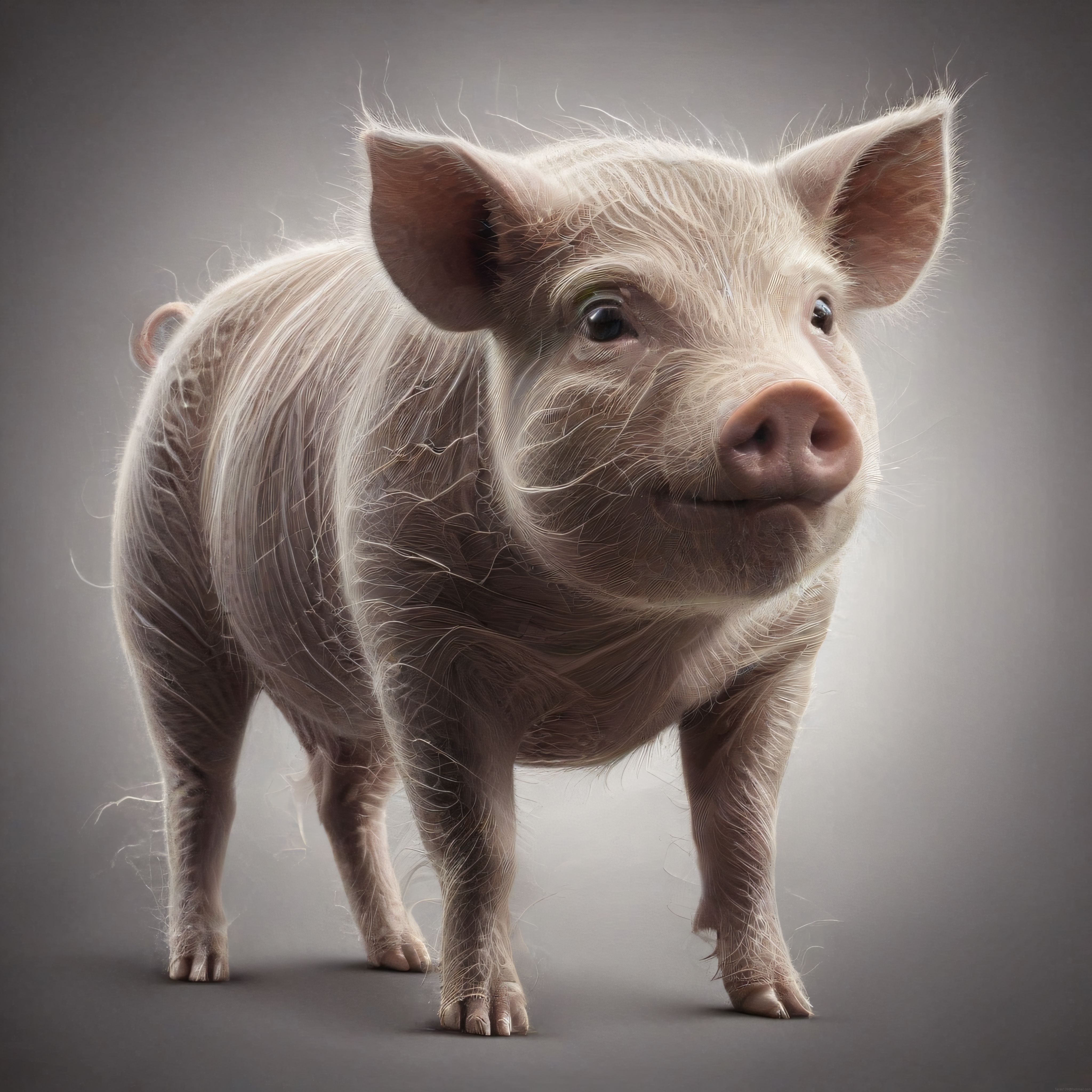


Çekim Tablosu
Belirtme (-i)domuzu
Yönelme (-e)domuza
Bulunma (-de)domuzda
Çıkma (-den)domuzdan
Tamlayan (-in)domuzun
Çoğul (-ler)domuzlar
Tanım
•isim, hayvan bilimi: Çift parmaklılardan, eti, yağı, derisi veya kılı için beslenen, evcil hayvan; hınzır (Susacrofa domestica)
•mecaz: Hain, aksi, ters, inatçı, hınzır kimse
Diğer Dillerde
Almancaschwein (nötr) /ʃvaɪ̯n/
swine, pig · a dirty, or contemptible person · luck, good fortune
çekim: çoğul Schweine · tamlayan Schweines
eş: Borstentier, Borstenvieh, Grunzer, Jolanthe, Matz, Wutz
köken: From Middle High German swīn, from Old High German swīn (akin to Old Saxon swīn), from Proto-West Germanic *swīn. Compare Low German Swin, Swien, Schwien (Schweyn), Dutch zwijn, English swine, Danish svin (also comparable to Latin suīnus and to Polish świnia).
aile: schweinartig, schweineartig, schweinekalt, schweinisch, schweinern
Bierbrauerei. — Domuz içyağı
Fransızcacochon, Cochon, porc, porc (eril) /kɔ.ʃɔ̃/
piglet · dirty pig, swine, contemptible person
çekim: çoğul cochons
eş: goret, laiton, nourrain, porc, pourceau, truie
köken: Originally imitative of the noise a pig makes.
aile: avoir des yeux de cochon, avoir élevé les cochons ensemble, avoir gardé les cochons ensemble, caractère de cochon, cochon de lait, cochon de mer, cochon d'Inde, cochon marron, cochonnaille, cochonne
Cochon! — Domuz! '
rabble, riff-raff, canaille
çekim: çoğul canallas
eş: bandido, bellaco, bribón, desgraciado, granuja, pillo
köken: Borrowed from Italian canaglia.
aile: canallesco
¡Cerdo! " — Domuz! '
feminine singular of bastardo
çekim: çoğul bastarde
Maiale. — Domuz eti.
Rusçaсвинья (dişil) /svʲɪˈnʲja/
pig, hog, sow, swine (mammal of genus Sus)
çekim: çoğul сви́ньи · tamlayan свиньи́
eş: хрюшка, хавронья, свинина
köken: Inherited from Proto-Slavic *svinьja. Compare German Schwein, Danish svin, and English swine.
aile: по-сви́нски, свина́рь, свина́рка, сви́нство, свиню́шник, свина́рник, свинопа́с, сви́нтус, свиново́дство, свини́на
Пьёт пиво. — Domuz içyağı
Arapçaحلوف, حَلُوف, خنزير, خَنْزير, خِنْزِير (eril) /ħal.luːf/
pig (mammal)
çekim: çoğul حَلَالِيف · tamlayan حَلُّوفٍ
köken: As a word unknown in Classical Arabic, where one uses خِنْزِير (ḵinzīr), it is most commonly considered of Berber origin, the exact derivation varying. Compare Tashelhit ilf (“pig”).
لحم الخنزير — Domuz eti.
çekim: çoğul خوکها
köken: From Middle Persian [Book Pahlavi needed] (HZWLYA) / [Book Pahlavi needed] (hwk' /hūg/), from Proto-Iranian *huHkáh, from Proto-Indo-Iranian *suH-, from Proto-Indo-European *suh₂kéh₂, from *suH-. Possibly cognate with English hog.
aile: خوکچه
مَن گوشْتِ خوک نِمیخورَم.
Azericedonuz /doˈnuz/
pork (mostly in combination with ət (“meat”))
çekim: çoğul donuzlar · tamlayan donuzun
köken: From Old Anatolian Turkish [script needed] (doŋuz, “pig”), ultimately from Proto-Turkic *toŋuz (“pig”).
Polşalı təqaüdçünü saxladığı 12 donuzu yeyib.
donuz əti
Kazakçaшошқа
pig, swine, Sus
çekim: çoğul шошқалар · tamlayan шошқаның
köken: From Proto-Turkic *čōčka (“pig”). Cognate with Tatar чучка (çuçqa), Uyghur چوشقا (choshqa), Kyrgyz чочко (cocko), Uzbek choʻchqa, Khakas сосха (sosxa), Bashkir сусҡа (susqa, “pig”), etc.
aile: шошқалық, шошқашы
Özbekçechoʻchqa /t͡ʃot͡ʃˈqa/
çekim: çoğul choʻchqalar
köken: From Proto-Turkic *čōčka (“pig”), itself from Proto-Turkic *čōč- (“child; young pig”) (whence Uzbek jujuq (“small child”)). Cognate with Tatar чучка (çuçqa), Uyghur چوشقا (choshqa), Kyrgyz чочко (cocko), Khakas сосха (sosxa), Bashkir сусҡа (susqa, “pig”), etc.
swine, pig
köken: From Proto-Turkic *čōčka. Cognate to Bashkir сусҡа (susqa), etc.
synonym of politieagent (“police officer”) · paw, mitt (crude term for a human hand) · homosexual
çekim: çoğul flikken
köken: Borrowed from French flic (“cop, policeman”).
Drinkend vogeltje — Domuz içyağı
Blijf met je gore flikken van mijn drank af!
scoundrel, villain, blackguard, bastard, degenerate · Term of abuse
çekim: çoğul canalhas
köken: Etymology tree Proto-Indo-European *ḱwṓder. Latin canēs Latin canisder. Vulgar Latin *canālia Italian canagliabor. Portuguese canalha Borrowed from Italian canaglia, ultimately equivalent to cão + -alha.
Puerco. — Domuz eti.
Japonca豚。
木内酒造 — Domuz içyağı
Korece돼지 /ˈtwɛ(ː)d͡ʑi/
pig, swine · fatty, pig
eş: 돈
zıt: 멸치
köken: From Early Modern Korean 되야지 (twoyyaci), 도야지 (doyaji). Appears to be related to Middle Korean 돝 (twòth). Perhaps from unattested *돌 (*dol, “pig, swine”) + -아지 (-aji, “diminutive suffix”) with a development similar to 말 (mal) and 망아지 (mang'aji) with the latter's dialectal and historical forms such as Korean 매아지 (maeaji) and Middle Korean ᄆᆞ야지 (moyaci), ᄆᆡ야지 (moyyaci), which seem to phonologically…
aile: 개돼지, 돼지감자, 돼지고기, 땅돼지, 멧돼지, 수퇘지, 악대돼지, 암퇘지
돼지! ' — Domuz! '
pig (a mammal of the genus Sus) · a nasty or dirty person · a pig (cop, police officer)
çekim: çoğul grisar · tamlayan grisens
köken: Inherited from Old Norse gríss.
aile: grisaktig, grisblod, grisfarm, grisfest, grisfoder, grisfot, grishuvud, griskotlett, griskulting, griskött
Gris! " — Domuz! '
Grisen säger nöff
Grisen grymtade
Grisens ungar kallas (gris)kultingar / spädgrisar
Lehçepies, świnia, świntuch (eril) /ˈpjɛs/
dog (Canis lupus familiaris) · dog (any member of the family Canidae, including domestic dogs, wolves, coyotes, jackals, foxes, and their relatives (extant and extinct); canid) · male fox or badger
çekim: çoğul psy · tamlayan psa
eş: gw. warsz. skowyr, reg. pozn. kejter, reg. pozn. luńt, reg. białost. sobaka, czworonożny przyjaciel, stróż domu
köken: Etymology tree Proto-Slavic *pь̀sъ Old Polish pies Polish pies Inherited from Old Polish pies.
aile: jak psu z gardła wyjęty, pieski, pod psem, psowaty, psu na budę, jak psa, jak zbity pies, na psie, psio, całuj psa w nos
Boczek — Domuz eti.
Ukraynacaсвиня́
Пивоваріння. — Domuz içyağı
Hintçeसूअर (eril) /suː.əɾ/
pig, boar · pork
çekim: çoğul सूअरों
köken: Inherited from Sauraseni Prakrit 𑀲𑀽𑀕𑀭 (sūgara), *𑀲𑀽𑀅𑀭 (*sūara), from Sanskrit सूकर (sūkara), from Proto-Indo-Iranian *suHkarás, from Proto-Indo-European *suh₂kéh₂ (“pig, swine”). Compare Kashmiri سور / सोर (sōr).
bar, ingot, pig (block of cast metal) · concrete brick, concrete masonry unit (CMU), concrete block, cement block, besser block, breeze block, cinder block · ellipsis of kevytsoraharkko (“expanded clay aggregate brick”)
çekim: çoğul harkot · tamlayan harkon
köken: harkk- + -o; probably from the same root as harkki.
aile: harkottaa, betoniharkko, harkkohytti, harkkokivi, harkkolaasti, harkkomuuraus, harkkoperustus, harkkorauta, harkkosakset, harkkotalo
Antaa helmiä sioille. — Domuzlara inci at.
kultaharkko
Selata v odpadních jímkách — ATIK DOMUZLAR
swine, pig (mammal) · wild boar · inkblot (a blot of ink)
çekim: çoğul disznók
köken: Borrowing from an Oghur language before the times of the Hungarian conquest of the Carpathian Basin (at the turn of the 9th and 10th centuries). Compare Chuvash сысна (sysna, “pig”), Eastern Mari сӧсна (sösna, “pig”). Dialectal gyisznó retains an older form of the word.
aile: disznólkodik, disznóság, disznódelfin, disznóhal, disznóhús, disznóól, disznópásztor, disznózsír, sündisznó, vaddisznó
Disznó! " — Domuz! '
pork
çekim: çoğul חֲזִירִים
köken: Cognate with Aramaic חֲזִירָא (ḥăzīrā), Arabic خِنْزِير (ḵinzīr), and Maltese ħanżir.
aile: חֲזַרְזִיר
תאכלו חזיר. — Domuz içyağı
a piglet, a young pig · a pig, hog · short for porcus marīnus (“sea-hog, mereswine, porpoise”)
çekim: çoğul porcī · tamlayan porcī
eş: sūs
köken: From Proto-Italic *porkos, from Proto-Indo-European *pórḱos (“young pig”). Cognate with Old English fearh (“piglet”). More at farrow. Compare also Ancient Greek πόρκος (pórkos).
aile: caput porcī, porca, porcārius, porcaster, porcella, porcellīnus, porcelliō, porcellus, porcetra, *porcīle
Dancasvin /sviːˀn/
(member of family Suidae) hog, pig, swine · swine
çekim: çoğul svinene · tamlayan svins
eş: gris
köken: From Old Norse svín, from Proto-Germanic *swīną, from an adjectival form of Proto-Indo-European *sū-.
aile: svineri
Vi har 5 grise. — 5 domuz varmış.
Norveççepurk, storeter
Svinekjøtt. — Domuz donyağı
Etimoloji
Eski Türkçe tonguz
Deyimler
Eş & Zıt Anlamlılar
Örnek Cümleler
Seni domuz!
You pig!
Domuz içyağı
Porch Drinking.
ATIK DOMUZLAR
WASTE PlTS
Tom bir domuz!
Tom is a pig!
Domuz olmayın.
Don't be pigs.
Domuz pembedir.
The pig is pink.
Domuz eti yemem.
I don't eat pork.
Domuz gibi yeme!
Don't eat like a pig!
Sen bir domuzsun.
You're a pig.
Tom bir domuzdur.
Tom is a pig.
Ben domuz sevmem.
I don't like pork.
Erkekler domuzdur.
Men are pigs.
İlgili Sorular
Yeşil, sürünen ve domuz gibi bir kokuya sahip şey ne?
Cevap: Kermit'in parmağı.
Bir 'Amin' ekleyebilir miyiz?
Lama hayvanının gerçek amacı nedir? İnekler süt, domuzlar et, koyunlar yün, atlar ise binek hayvanı olarak hizmet eder.
Lama hayvanının insanlara sağladığı faydalar nelerdir? İnekler süt, domuzlar pastırma, koyunlar yün, atlar ise binek hayvanı olarak kullanılabiliyor.
Daha iyi evcil hayvan olarak Gine domuzu mu, yoksa tavşan mı tercih edilmeli?
Aşağıdaki memeli taksonlarını doğru üyelerle eşleştirin:
A. Etçiller
B. Çift ayaklı ayaklılar
C. Böcekçiller
D. Marsupiallar
E. Momotremeler
F. Tek ayaklı ayaklılar
G. Primatlar
H. Kemirgenler
I. Dişsizler
J. Pangolinler
1. Köstebek
2. Kunduz
3. Panda
4. Tamarin
5. Domuz
6. Oposum
7. Armadillo
8. At
9. Echidna
10. Pullu Anteater
İlgili / Bileşik Terimler
Geneldolly
Genelorchardgrass
Genelcocksfoot
Genelporpoise
Genelhoghide
Genelhogskin
Genelpigskin
Genelflatweed
Genelbaneberry
Genelpigsty
Genelpork
Genelbacon
Genelhand truck
Genelbean trefoil
Genelrough cocklebur
Genelherb christopher
Genelpig footed bandicoot
Geneli don't eat pork
Genelswine influenza
Genelswine flu
Birleşik Kelimeler
domuz arabasıdomuzayağıdomuz ayrık otudomuzbağıdomuz balığıdomuzdamıdomuz derisidomuz dikenidomuz gribidomuz otudomuztırnağıdomuz yağıAfrika domuzuHint domuzuyaban domuzuyer domuzu